
Location (proximity search)
Units: Kilometers
Address, City, Zip-Code, Country, ...
Search from an address or location.

Area information

Unit
300
52000
Total area
200
230000
Mezzanin
100
10000
Ceiling height
3
26
Availability

Infrastructure

Motorway (distance)
0
36
Nearby motorways
Freight village (distance)
0
139
Port (distance)
0
114
Airport (distance)
0
179

Warehouse for rent in Germany

Find a list of currently available warehouses in Germany here. We have also compiled useful information regarding logistics real estate in Germany for you.

205 Warehouses

Warehouse Area information
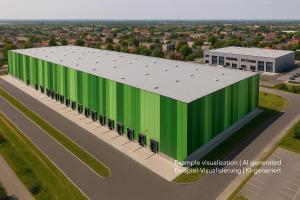
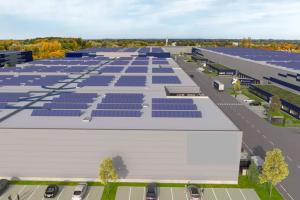
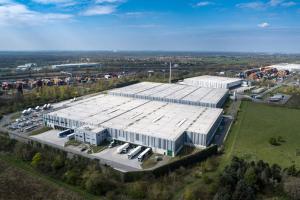
Business Park in Braunschweig
Warehouse in Brunswick
Location: Braunschweig
Total area: 7 000 m²
Available units: 4 787 m², 2 132 m²
Height: n.a.
Availability: Immediately
Request property
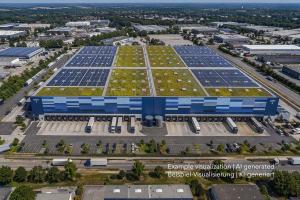
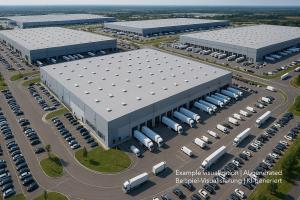
Warehouse eastern of Munich
Lagerhalle östlich von München, warehouse eastern of Munich
Location: Kirchheim b.München
Total area: 3 600 m²
Available units: 800 m², 1 000 m², 1 000 m², 900 m², 800 m²
Height: 8,0 m
Availability: Immediately
Request property
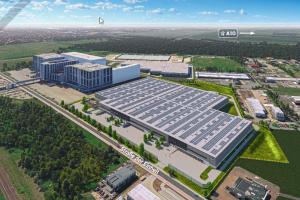
Warehouse between Karlsruhe and Rastatt
Logistikimmobilie_Warehouse Karlsruhe Rastatt
Location: Muggensturm
Total area: 28 960 m²
Available units: 10 467 m², 10 467 m², 4 012 m², 4 012 m²
Height: 12,2 m
Availability: In 1 year
Request property
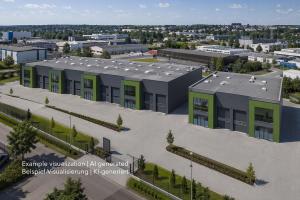
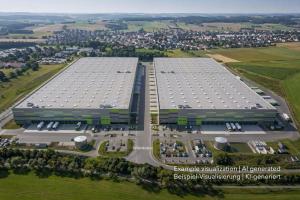
Business Park northern of Hamburg
Gewerbepark nördlich von Hamburg, Business Park northern of Hamburg
Location: Ahrensburg
Total area: 14 115 m²
Available units: 1 533 m², 1 511 m², 2 037 m², 1 295 m²
Height: 8,0 m
Availability: Soon
Request property
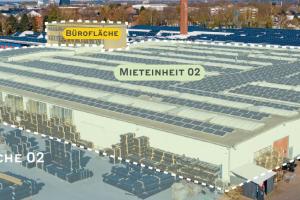
Logistics center in Gera
Logistikimmobilie in Gera, Warehouse in Gera
Location: Gera
Total area: 26 000 m²
Available units: 7 000 m², 8 000 m², 10 000 m²
Height: 12,2 m
Availability: Soon
Request property

Key facts about logistics real estate in Germany

Location analysis for the perfect logistics site
Understanding cost structure of renting a logistics property
Rental price map overview
What defines a modern logistics property?
Buy or rent a warehouse?
German logistics real estate market report: brief overview

Renting a warehouse – have you already chosen a region in Germany?
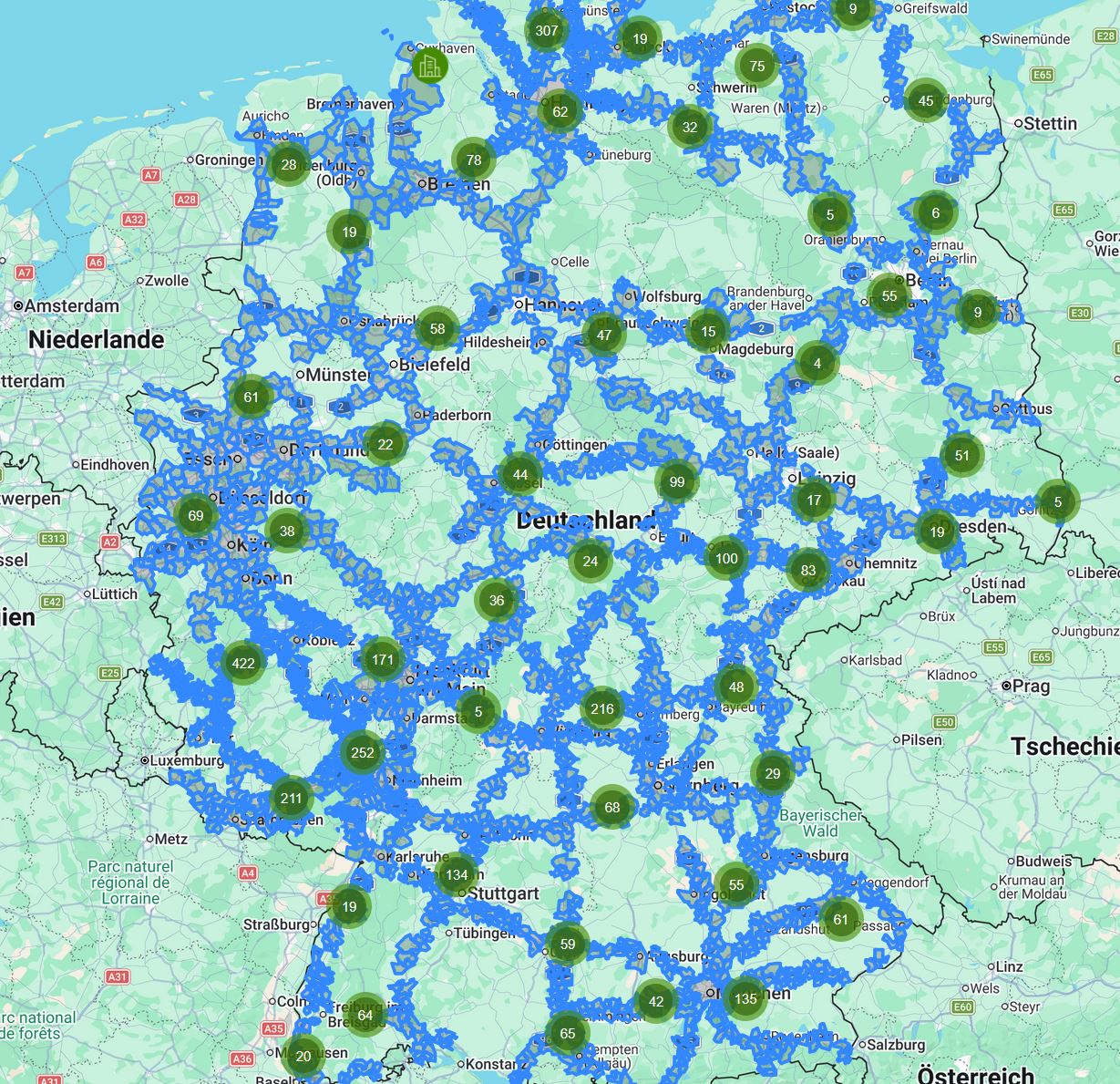
Location analysis tool for logistics in GermanyLeasing a logistics property is a key step toward efficient supply chains and smooth operations. You will find a wide range of available spaces in our overview. However, before you decide on a specific warehouse, remember: the right location is the foundation for long-term success.

Why location is key

A well-chosen location reduces costs, shortens transport routes, and strengthens your competitiveness. Factors such as infrastructure, proximity to customers, the availability of skilled labor, and rental rates play a central role in this regard.

Finding the perfect logistics location with our web analysis tool

Our location analysis tool helps you identify and compare suitable regions based on data. This enables you to make informed decisions and determine where a new logistics property is truly worthwhile—before you begin a targeted search for the right facility.

Location analysis tool


Understanding rental cost structure of a warehouse in Germany: Transparency for tenants

Anyone looking to rent logistics real estate should have a clear understanding of the cost structure. Below, we use a realistic scenario to illustrate the composition of the monthly costs for a modern logistics property.

1. Net rent: Costs by area type

The monthly net rent is the decisive factor when comparing logistics properties. Costs vary according to the type of space, with warehouse space being the primary cost driver, as it accounts for the largest share of the total area.

Example:

  • Warehouse space: €5.80/m² per month
  • Office and staff areas: €13.50/m² per month
  • Mezzanin space: €2.90/m² per month

Note: Net rents depend on the lease term. Longer terms generally result in slightly lower prices per square meter.

2. Additional monthly costs for parking spaces

For the operation of a logistics property, parking spaces are a significant component of the cost structure:

Example:

  • Car parking spaces: approx. €20 per space/month
  • Truck parking spaces: approx. €50 per space/month

3. Effective rent through incentives

Landlords frequently offer rental incentives to lease space more quickly. These reduce the average rent actually paid over the term of the lease. Typical incentives include rent subsidies and rent-free periods.

Example:

With a 5-year lease term including a 3-month rent-free period, there is already a noticeable reduction in the effective rent.

Effective warehouse rent: €5.51/m² per month

4. Overview of logistics property ancillary costs

Another significant cost factor is ancillary costs, which are incurred monthly in addition to the base rent (property operating costs, maintenance and repairs, insurance, groundskeeping, etc.). In practice, ancillary costs for logistics properties typically range from approximately €0.50 to €1.50 per square meter per month, depending on the quality of the property, energy consumption, and the scope of services provided.

Example:

Advance payment for ancillary costs: €0.90/m² per month

5. Administrative costs: Often overlooked

In addition to ancillary costs, service costs (often referred to as management fee) are incurred in most cases. These costs cover, among other things, commercial administration and property management.

Example:

Service costs: 2.5% of the net monthly rent

6. Value Added Tax (Sales Tax)

Statutory value-added tax (currently 19% in Germany) generally applies to all the cost items mentioned. In the commercial sector, this is usually added in full to the rent and ancillary costs.

The actual monthly cash outflow corresponds to the gross rent (including VAT)—even though, in most cases, the VAT is deductible as input tax.

7. Example: Overview of total monthly costs

The following table shows a complete sample calculation for a logistics property, including all cost components (5-year lease term and 3 rent-free months):

Cost position Calculation Month (€)
Warehouse space 8.000 m² × 5,80 € 46.400
Office and social space 400 m² × 13,50 € 5.400
Mezzanin space  700 m² × 2,90 € 2.030
Car parking spaces 20 spaces x 20 € 400
Truck parking spaces 5 spaces x 50 € 250
Net rent (nominal)   54.480
Incentives 3 months rent-free period  -2.724
Effective net rent   51.756
Ancillary costs 9.100 m² × 0,90 € 8.190
Service costs 2,5 % 1.294
Total (net)   61.240
VAT (19 %)   11.636
Total (gross)   72.876

8. Other important contract components

In addition to costs, two contractual aspects warrant particular attention.

Indexation (inflation adjustment): Many lease agreements for logistics properties include an indexation clause, typically linked to the Consumer Price Index (CPI). This means the rent rises or falls over time in line with inflation. While indexation does not affect the initial rent, it does impact cost trends in the medium term.

Security deposit: The security deposit serves as a safeguard for the landlord and is determined based on the tenant's creditworthiness. Common forms include bank guarantees and cash deposits (usually amounting to several months' rent).

For companies, this entails either tying up liquidity or incurring additional financing needs at the start of the lease. Particularly in the case of large logistics facilities, the security deposit can have a significant impact on overall financing.


Rental prices for warehouses by logistics region

The map shows net rental rates for warehouses in Germany, distinguishing between existing properties and new builds. In addition to the logistics region, the rental rate is heavily influenced by the tenant's specific fit-out requirements; necessary conversion work increases the cost. Furthermore, the price per square meter (€/m²) is generally lower for long-term leases (e.g., 10 years) than for shorter lease terms (e.g., 5 years).


What defines a modern logistics property?

A modern logistics property is far more than a traditional warehouse. It is designed for the efficient storage and picking of goods and for rapid dispatch. Today, the primary focus is on productivity, flexibility, and sustainability.

Key features of modern logistics properties include:

  • Clear ceiling heights of typically 10 to 12 meters or more
  • High floor load-bearing capacity for racking systems and forklift traffic
  • Numerous loading docks and ample maneuvering space
  • Good connectivity to highways and metropolitan areas
  • Space for offices, staff facilities, and mezzanine levels
  • Infrastructure prepared for automation and robotics solutions

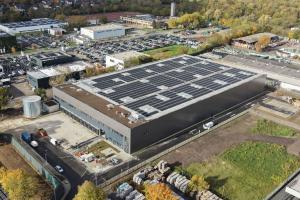
ESG requirements are also becoming increasingly important. Many new developments feature photovoltaic systems, LED lighting, charging infrastructure for electric vehicles, and energy-efficient building systems.

Storage of water-polluting substances (WGK) as a key location factor

For companies in the chemical, industrial, automotive, or retail sectors, the storage of substances hazardous to water often plays a crucial role. This specifically concerns firefighting water that becomes contaminated with hazardous substances during a warehouse fire and must not seep into the soil, so as to avoid polluting the groundwater. To address this, logistics facilities must be equipped with special features—such as containment basins or impermeable warehouse floors—and hold the necessary permits. Lithium batteries are a typical example of stored goods that pose a risk to water.

Requirements can vary significantly depending on the hazard class (WGK 1 to WGK 3). Companies intending to store or handle such products should therefore verify—as early as the property search stage—whether the intended use is permitted at the location.


Buy or rent a warehouse?

Should I buy or rent a warehouse? If you are faced with this question, our advantages and disadvantages matrix will help you make a decision.

  Advantages Disadvantages
Rent
  • You remain flexible and can react faster and easier to changes.
  • You have good planning security if you link the rental period to a supply contract (e.g. in contract logistics).
  • You do not have high investment costs and therefore less risk.
  • With existing properties, you have a time advantage, as planning and construction times are no longer necessary.
  • You can move into an existing property or let a project developer develop a suitable property for you, which you then rent (only for large projects).
  • Manufacturing companies can focus on investments in their core business.
  • You can deduct the rental costs from tax.
  • Your rent payments do not have a positive impact on the balance sheet.
  • You can only adapt your rented warehouse to a limited extent to meet your individual requirements.
  • In the event of early termination of the rental agreement, high compensation payments may be due.
  • You have to pay VAT on the rental of warehouses.
Purchase
  • Your warehouse has a positive impact on your balance sheet as an asset. You can write off three percent a year.
  • Large logistics properties in good locations are often part of investment funds and can be sold on good terms.
  • You can build your warehouse according to your ideas and needs.
  • Since you are not tied to any rental period, your own warehouse offers a high level of planning security.
  • The construction of a warehouse for your own use usually is a high investment. For companies in the manufacturing industry, this reduces the financial scope for investments in the actual business area (e.g. R&D).
  • In the event of structural changes or a change in the market situation, having your own property can reduce the company's flexibility. However, large logistics properties in attractive locations can often be sold quickly and on good terms.
  • Buying commercial land in a good location can be difficult. From the perspective of many municipalities, warehouses require a lot of space and often do not generate the desired number of jobs and trade tax income.

German logistics real estate market report: brief overview

The German logistics real estate market is showing a stable upward trend and remains a key driver within the commercial real estate sector. Take-up rose to approximately 5.2 million m² (+6%) in 2025, with momentum intensifying significantly in early 2026—recording a roughly 30% increase in take-up during the first quarter.

Key developments at a glance:

  • High demand: Logistics service providers and e-commerce companies, in particular, dominate the market, driving a continuous rise in take-up. 
  • Increase in large-scale deals: There is renewed demand for larger spaces (exceeding 20,000 m²). 
  • Regional disparities: While prime locations such as Munich, Frankfurt, and Hamburg see strong demand, vacancy rates are higher in some regions of East Germany. 
  • Restrained new construction: A reduction in speculative developments is leading to a shortage of modern space in many regions.

Rental rates and supply:

  • Prime rents continue to rise, particularly in sought-after logistics hubs.
  • At the same time, the supply of available space remains limited, intensifying competition for suitable properties.

Outlook for tenants:
Tenants looking to lease logistics space currently face a demand-driven market characterized by rising prices and limited offers in prime locations. However, opportunities are emerging in regions with lower occupancy rates and within existing stock.

We find the right warehouse for you.

Simply send us your search criteria.